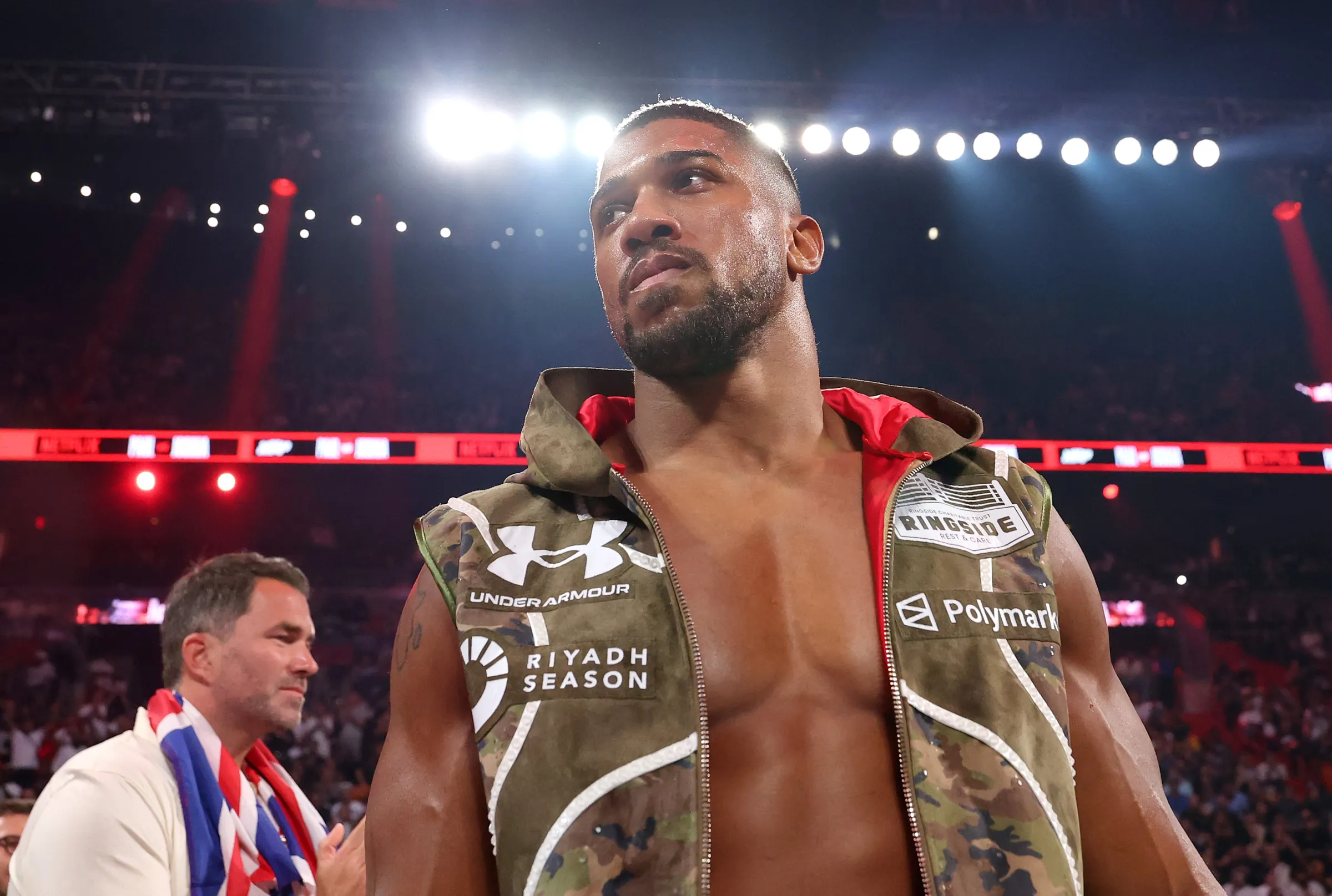
When Anthony Joshua stepped into the ring for another massive heavyweight clash, millions expected redemption. Instead, fans watched another painful defeat added to the résumé of a fighter who was once presented as boxing’s unstoppable king. Yet despite the loss, Joshua reportedly walked away with more money than most champions will ever see in their entire careers.
And that raises a difficult question for modern boxing:
Is the sport still about winning — or just about selling?
For decades, boxing built its legends on dominance. Fighters like Muhammad Ali, Mike Tyson, and Floyd Mayweather Jr. earned superstardom through either brilliance, destruction, or unbeaten records. Today, however, the economics of boxing seem to operate under a different reality. A fighter can lose multiple high-profile bouts and still remain the face of the division simply because he generates attention, ticket sales, sponsorships, and pay-per-view numbers.
Joshua is the perfect example.
Even after setbacks against Oleksandr Usyk and other elite opponents, Joshua remains one of the sport’s biggest earners. Why? Because modern boxing rewards marketability almost as much as merit. Broadcasters know his name sells. Sponsors know fans still watch. Promoters understand that controversy, redemption arcs, and celebrity status often generate more revenue than an undefeated record.
To many fans, this feels unfair.
A lesser-known fighter may grind for years, remain undefeated, and still earn only a fraction of Joshua’s purse. Meanwhile, global stars continue cashing enormous checks regardless of the outcome. In almost any other sport, repeated losses reduce your value dramatically. In boxing, losses can sometimes increase interest.
But there’s another side to the argument.
Joshua is not being paid only to win fights — he is being paid to create events. He fills stadiums, attracts media coverage, and brings millions of casual viewers into the sport. Boxing has always been part sport and part entertainment business. The biggest stars are often those who can sell emotion, drama, and spectacle, not just victories.
Still, the imbalance is becoming harder to ignore.
Many boxing fans believe the current system discourages competitive fairness. Champions avoid risky fights to protect records, while promoters focus on profitable names over deserving contenders. Rankings are debated endlessly, title shots can appear politically motivated, and paydays often seem disconnected from actual sporting achievement.
The result is a growing frustration among hardcore supporters who want boxing to feel more like a legitimate sport and less like a carefully managed business empire.
Anthony Joshua’s latest loss did not destroy his career. Financially, it barely dented it. In fact, he may continue earning astronomical sums for years to come. That reality says a lot about where boxing stands today.
The real currency in modern boxing is no longer just winning.
It’s attention.